Recently, there seems to be a push for less interaction between customers and service workers with the introduction and broader adoption of kiosks. We started on this route in 2003 when McDonald's started testing touchscreen kiosks. They expanded them in 2014–2015 and pushed for kiosks in all US locations by 2020, which lined up perfectly with the pandemic.
When COVID hit the US in early 2020, the desire to interact with another person understandably dropped, and a race began in coffee shops, retail stores, and restaurants to implement these new technologies as quickly as possible — suddenly a QR code on the table was taking your order instead of a server. And while many of us have grown accustomed to these technological advancements, I can't help but worry about what we lose when we no longer have these micro-interactions with human beings in customer service situations.
When I was in my senior year of high school, I got a job at a Dunkin' Donuts in my town. As a 17-year-old with a new driver's license I was eager for more freedom, and a job would give me just that. I worked at Dunkin' Donuts for four years during my winters and summers home from college. While there was nothing particularly glamorous about the job, there were some things I really loved about it, most notably the regulars: the woman who came in around 7am for two medium coffees, one with milk and a Splenda on the side; the man who came in at 5pm for a large iced decaf black; and the woman who came in multiple times a day, always to order an extra-large hot coffee with cream and a blueberry flavor shot.
My coworkers and I would race to fill the orders of the people we recognized, feeling the excitement of connection when they'd smile as we handed them their coffee before they even asked for it. By some measure, these were meaningful interactions for both us and the customer, and it taught me a lot about humanity and how much a small act of recognition means to people.
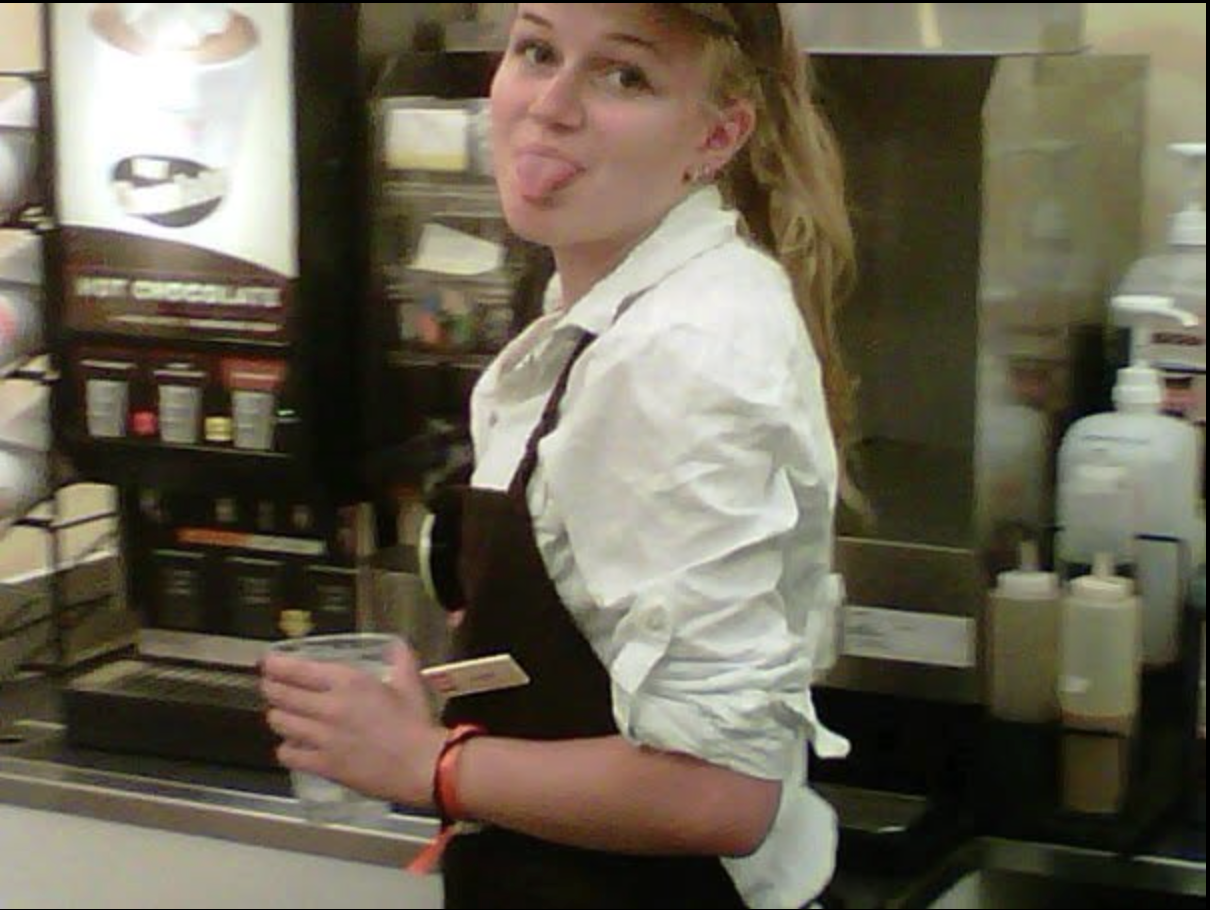
I also consider my close friend who worked at Starbucks for a long time, including several years during COVID. They would often tell me about the frustrations of working with people all day, but between those frustrations, there were stories of employee camaraderie and funny customer interactions. They note, "When we weren't slammed with over 200 orders, it was nice to actually have a human conversation with people and ask about their day."
When talking to this friend about this post, I asked them what they thought we would lose from shifting to a more digital customer service experience, and the first thing they pointed out was what it would do to the employees. "The wait times are already too long with employees already being short-staffed regularly and intentionally by management. Kiosks would mean even less staff because you don't really need a whole person for register, just someone who can sometimes jump on. That sort of thing has tended to leave staff feeling more stressed and customers more upset at having to wait longer because [there are] less people."
This made me think of another type of customer we had at Dunkin' Donuts: the customer who knew exactly how they wanted their coffee order made and which staff member they wanted it made by. They would stand and watch while it was made and chat with the employee who had been specifically requested to make it.
While the increased attention from this type of customer could be frustrating, the entire interaction would be made even more so if there were fewer staff members and more kiosks. The routine between customer and employee would need to totally shift, and the interaction would be strained. Instead of having a member of the staff ready to chat with the customer while making their specific coffee order, the customer would have to input their order (the same thing every day) into a kiosk and settle for a quick "thank you, have a nice day" from whatever employee is making it.
With the implementation of more kiosks in these types of service spaces, I think about people like the woman who got her two medium coffees, one with milk and a Splenda on the side. A kiosk could take that order just as accurately. What it couldn't do is recognize her, have her coffee ready before she asked, or give her that small hit of being known and remembered.
However, when I spoke to my friend about this, they didn't see the rise of kiosks as an inevitable shift towards technology always taking our orders. In their experience, the most thriving businesses are "the ones that are human first."
Even the aforementioned examples of Starbucks and Dunkin' Donuts are, I believe, striking that balance fairly well. Starbucks leads the way in the "buy online, pick up in store" experience, which offers options to reorder previous drinks and still allows for a quick chat with someone behind the counter if you both have time. And the only time I've recently come across a kiosk at a Dunkin' Donuts was at the airport, which is a perfect use case for a kiosk since a wide range of customers need to be served as quickly as possible, and even then there were people behind the counter taking orders. I have yet to see a kiosk pop up at my local Dunkin' or Starbucks.
When I consider a place that balances good human customer service with technological advancements, I think of a bubble tea place in my neighborhood that I go to often. While they do have a kiosk that people can and do often use, I've also watched the people who work there engage with customers in a way that makes me smile: offering a high five to kids that come in, asking if a customer walking in with a limp needs ice.
Seeing things like this reassures me that tech can be incorporated into the human experience in a way that doesn't inherently replace or significantly reduce human interaction. Often, what takes away from the human interactions in service spaces is not the incorporation of new technology, but lack of staffing and dubious business priorities wearing a "technology" costume. While I still have my concerns about the frequency of customer service micro-interactions, I can see there are intentional ways that employees and customers engage with each other. Even with more screens in customer service spaces, there are opportunities for all of us to keep customer service human.
